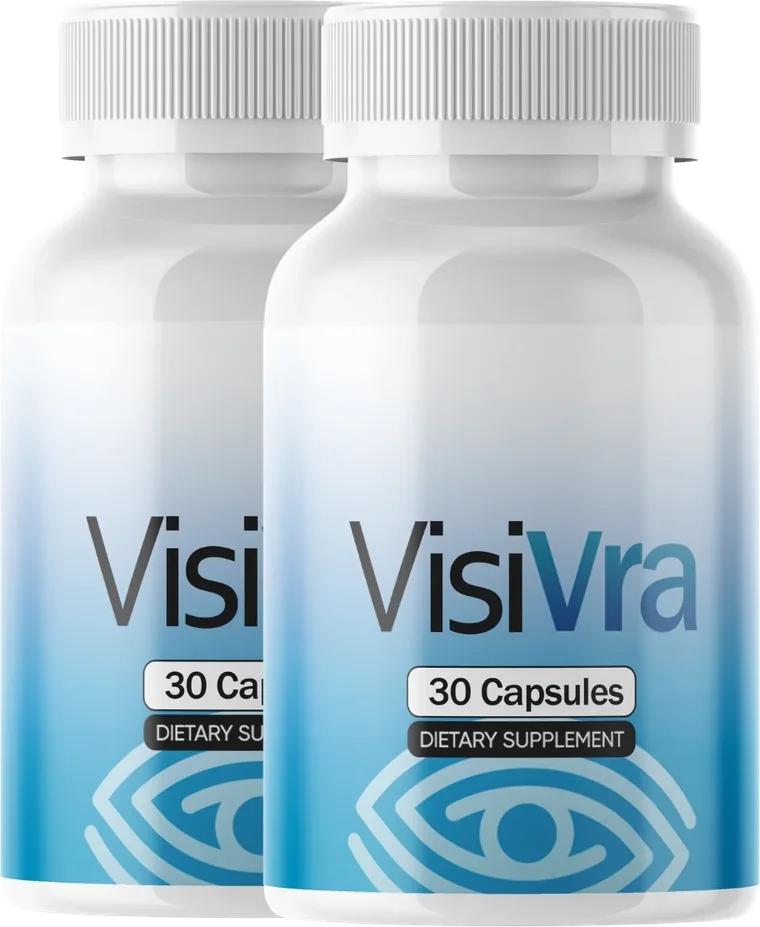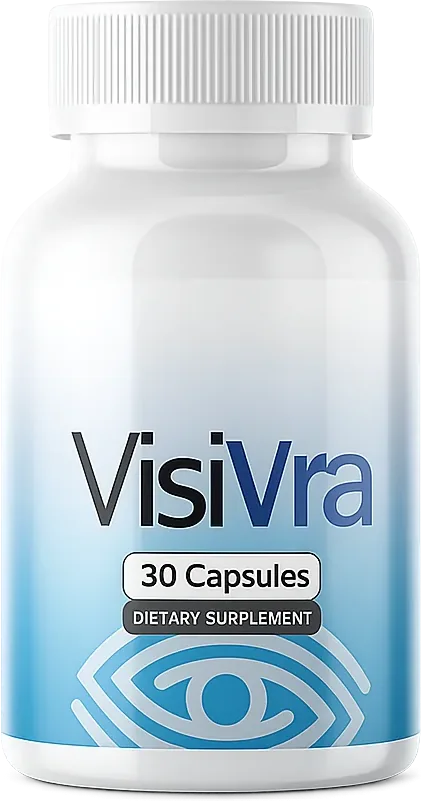
Visivra Capsules benefits cannot be stated as facts, because we found no study of the product itself and no ingredient amounts are printed in anything we hold1.
What can be said honestly is narrower. Public health agencies describe what some of the listed nutrients do in the body. One large federal study tested a specific nutrient formula in people with an eye disease. And a few of the ideas you may have seen on sales pages have been looked at directly, with results that are worth knowing.
This page sorts those pieces apart. It is written by an independent information site, not by the maker or seller, and nothing here is a promise about your eyes.
Line01Are there proven benefits of Visivra Capsules?
No; as far as we found, Visivra itself has not been studied, so any benefit is unknown rather than shown.
A benefit claim for a product needs evidence about that product: what is in it, how much, and what happened to people who took it compared with people who did not. We have none of those for Visivra. The seller's ingredient list names lutein, zeaxanthin, bilberry extract, astaxanthin, zinc and vitamin A; no amounts are printed in anything we hold, and the bottle panel is not visible in the photos2.
That does not mean the capsules do nothing. It means nobody outside the seller can say what they do, and the seller has not shared data that would let anyone check. Everything below is about nutrients and studies in general.
It helps to separate three questions people often blend together. Is a nutrient needed by the body? Did a study of a set formula change an outcome in a defined group? And does this particular capsule do something for you? Public sources answer the first two in places. Only a study of Visivra could answer the third, and we did not find one.
Line02What do the nutrients on the Visivra Capsules list do in the body?
Health agencies describe roles for some listed nutrients, such as vitamin A for normal vision, but those roles say nothing about this product's effect.
- Vitamin A: needed for normal vision, the immune system, reproduction and growth. Deficiency is rare in the US3. See our vitamin A page.
- Zinc: a mineral adults need in small daily amounts, with an upper limit of 40 mg a day from all sources4.
- Lutein and zeaxanthin: carotenoids found in leafy greens such as kale, spinach and Swiss chard5.
- Bilberry: promoted for eye conditions and more, but there is not enough reliable evidence to say whether it helps any health condition6.
- Astaxanthin: a carotenoid also eaten in fish and shellfish; the public review we cite looked at safety, not eye effects.
Notice the pattern. "Needed for normal vision" describes what happens when you lack vitamin A, not what extra vitamin A adds for someone who already eats enough. Visivra's amounts are not shown and say nothing about what it will do for you. Our ingredients overview covers each name in more depth.
Food is where the stronger link sits. The AAO says diets rich in vitamins C and E, zinc, lutein, zeaxanthin and omega-3 fatty acids have been linked to lower risks of AMD and cataract5. Those findings come from what people eat over years, not from a capsule. A plate of spinach or kale is a known source of lutein and zeaxanthin; a capsule with unprinted amounts is not something anyone can rank against it.
Line03What did the AREDS2 study test, and does it apply to Visivra Capsules?
AREDS2 tested a specific high-dose formula in people with age-related macular degeneration, and its results do not apply to Visivra.
The National Eye Institute's AREDS2 formula held vitamin C 500 mg, vitamin E 400 IU, zinc 80 mg, copper 2 mg, lutein 10 mg and zeaxanthin 2 mg7. In people with intermediate AMD, supplements of this kind lowered the risk of moving to advanced AMD by about 25 percent. They did not stop AMD from starting, and they had no effect on cataract.
Three things separate that study from Visivra. The study used fixed, published amounts; Visivra's amounts are unknown. The study included vitamin C, vitamin E and copper, which are not on the seller's list. And the study looked at people who already had AMD, not at healthy adults or screen users. So the AREDS2 result is a fact about AREDS2, not a reason to expect anything from this product.
AREDS2 also shows why details matter. The earlier AREDS formula used beta-carotene, and replacing it with lutein and zeaxanthin removed the lung-cancer risk seen with beta-carotene in smokers8. A small change in one ingredient changed who could safely take the formula. That is exactly the kind of detail a buyer cannot judge without a full label.
Line04Why can't the Visivra Capsules sales-page claims be verified?
Sales pages for the product make claims about eyesight, screens and seeing in low light that we cannot verify, because no product study or amounts were provided.
Several rules shape what those claims mean. The FDA does not approve dietary supplements, does not approve companies, and does not approve supplement labels or structure/function claims9. When a supplement makes a structure/function claim, it must carry the FDA statement, and the claim is not approved by the FDA10. In short, a claim on a supplement page is the seller's own statement.
We also cannot check a claim against a dose. Even where a nutrient has been studied, the amount used matters, and we have no amount for any Visivra ingredient. That is why this site does not repeat those claims as facts. If you want the seller's evidence, ask the order desk at +1 (302) 200-3480 or [email protected] which study supports a given claim and what amounts were used.
Line05Which claim types have evidence, and which do not?
The table sorts common claim types by what public evidence exists; none of the rows show evidence for Visivra itself.
| Claim type | What public evidence exists | Does it tell us about Visivra? |
|---|---|---|
| Vitamin A matters for normal vision | NIH describes this role; deficiency is rare in the US | No; amount and form not shown |
| Nutrients slow AMD getting worse | AREDS2 formula in people with intermediate AMD | No; different product and amounts |
| Bilberry helps the eyes | Not enough reliable evidence for any condition | No |
| Help with screen eye strain | AAO points to blinking and habits, not pills | No product data |
| Blue light filtering | A study found blue-light filters no better than a neutral filter | No product data |
| Seeing better in dim light | Low-light trouble is a sign of deficiency, which is rare here | No product data |
The middle column is the useful one. It shows where real evidence sits: in food, in a defined study population, or in daily habits. For a full look at what the seller's material does and does not show, see results.
Line06What about screens, blue light and seeing at night?
The American Academy of Ophthalmology links screen discomfort mainly to blinking less, and its advice centers on habits, not supplements11.
The AAO recommends the 20-20-20 rule: every 20 minutes, look at something 20 feet away for 20 seconds. It also suggests adjusting room lighting and screen contrast. On blue light, the AAO notes a study that found blue-light filters were no more effective for eye-strain symptoms than a neutral filter. Our screen time page and blue light page go further.
Trouble seeing in low light deserves a separate note. The NIH lists it as the first sign of xerophthalmia, from vitamin A deficiency3. That is a medical issue, not a reason to self-dose. If dim-light vision changes for you, see an eye care professional rather than reaching for a supplement.
Line07What would real evidence for Visivra Capsules look like?
Real evidence would start with a full label and a published study of the product in people, compared with a placebo.
- A Supplement Facts panel showing every amount and form.
- A named study of this formula, not of single ingredients elsewhere.
- A comparison group taking a look-alike capsule with no active ingredients.
- Clear outcomes measured by eye care professionals, with the length of the study stated.
- Results that include people who saw no change, not only the best cases.
The owner supplied three short testimonials with mixed stars (5, 4 and 3). They talk about routine, such as taking a capsule with a meal, and none describes an eyesight result; one says a fast change did not happen. Seller-supplied comments are not evidence. Our reviews page explains how to read them.
Line08What can you do for your eyes while the evidence is missing?
Book a comprehensive dilated eye exam, which the National Eye Institute calls the single best thing you can do for eye health12.
Many eye diseases have no early symptoms, so an exam can find things you would not notice. The NEI suggests that people over 60 may need one every 1 to 2 years, depending on risk13. The CDC says to see an eye care professional for decreased vision, eye pain, drainage or redness, or double vision14.
If you still want to try the capsules, read the panel first and check it against our safety page, especially if you take medicines, are pregnant or smoke. Pricing and packs are on the order page: See the live price.
Tool
20-20-20 screen-break timer
The American Academy of Ophthalmology suggests that every 20 minutes you look at something about 20 feet away for 20 seconds, and remember to blink. Start the timer and leave this tab open. It runs only in your browser.
Breaks taken today: 0
A habit tool, not a medical test. Eye pain, redness, double vision or a sudden change in vision needs an eye care professional.
Safety: Visivra is sold for adults. The bottle photos show only the front label; no Supplement Facts panel, amounts or warnings are visible. Read the full panel before use. The seller lists vitamin A and zinc, which have daily upper limits from all sources combined. If you are pregnant or might be, breastfeeding, under 18, smoke or used to smoke, have a medical condition or take any medicine, ask your doctor or pharmacist first. Never change a prescribed medicine on your own. A supplement does not replace an eye exam: sudden vision changes, eye pain, redness, flashes or double vision need an eye care professional.
Frequently asked questions
What are the Visivra Capsules benefits for eyes, if any?
None are shown for the product itself, because we found no study of Visivra and no amounts are printed in anything we hold. Some listed nutrients have known roles in the body, but that does not show what this capsule does.
Does Visivra work as well as its sales pages suggest?
We cannot verify those claims. We found no published study of this formula, and no amounts are printed, so there is nothing to check the claims against.
Is there evidence linking Visivra Capsules to less eye strain?
We cannot say it does. The AAO links screen discomfort mainly to blinking less and recommends habits like the 20-20-20 rule.
Will Visivra help me see at night or in dim rooms?
There is no evidence that it does. New trouble seeing in low light should be checked by an eye care professional, since it can signal a medical problem.
Why does this site not repeat the Visivra blue light claims?
Because we found no study of the product and no amounts to check them against. The AAO also notes a study where blue-light filters did no better for eye-strain symptoms than a neutral filter.