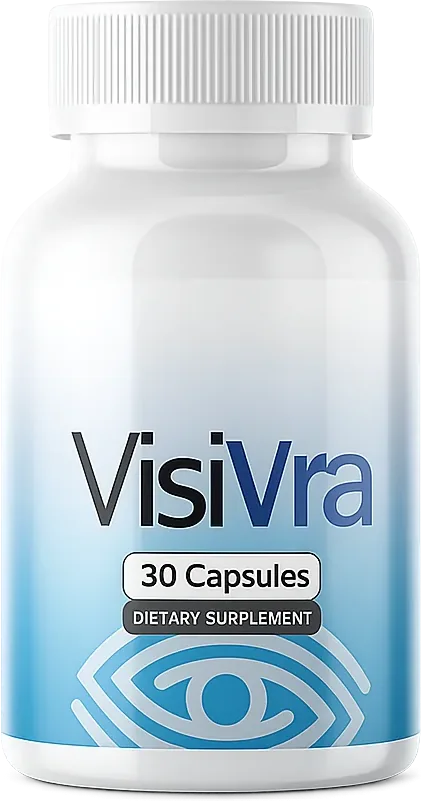
Visivra Capsules side effects have not been documented in anything we hold: we have no product study, no adverse event summary and no printed panel to work from1. That does not mean there are none. It means the only guide available is what public health sources say about each listed ingredient when people take too much of it.
This page goes through those signs one ingredient at a time, explains why the capsule's other ingredients matter if you have allergies, gives a symptom table, and shows how to stop, who to call and how to report a problem to the FDA. It is not a diagnosis tool. If something feels wrong, speak with your doctor or pharmacist, and take any change in your eyes to an eye care professional.
Line01Are there known Visivra Capsules side effects?
None specific to Visivra Capsules are on record in anything we hold. The maker has not shared trial data, and the bottle photos show no warnings section2.
The six listed ingredient names come from the seller's list in the owner's pack, not from a panel on the photos: lutein, zeaxanthin, bilberry extract, astaxanthin, zinc and vitamin A1. No amounts are printed. Because side effects from nutrients usually depend on dose, an unknown dose leaves an open question.
So the sensible approach has two parts. First, know the signs that public sources link to too much of each listed nutrient. Second, get the real panel so you and your pharmacist can see whether the amounts come anywhere near those levels once your other supplements are added. Our label guide explains what to look for.
Line02What does too much vitamin A feel like?
NIH lists severe headache, blurred vision, nausea, dizziness, muscle aches and coordination problems as signs of too much preformed vitamin A3. These come from high intakes, not from normal amounts.
We do not know whether the vitamin A in Visivra is preformed or beta-carotene, or how much is in a capsule. If your panel shows preformed vitamin A, such as retinyl acetate or retinyl palmitate, it counts toward the adult upper limit of 3,000 mcg a day from all sources3. A multivitamin taken on the same day adds to that total.
Blurred vision deserves a special note. It is on the NIH list, but it can also be a sign of an eye problem that has nothing to do with a supplement. Either way, it needs an eye care professional, not a wait-and-see approach. For the full vitamin A picture, including pregnancy and smoking cautions, see our vitamin A page.
Line03What happens with too much zinc over a long time?
Too much zinc taken for a long time can cause low copper levels, lower immunity and low HDL cholesterol, NIH says4. These build up quietly, so they may not feel like side effects at all.
Copper is a mineral the body needs, about 900 mcg a day for adults, and excess zinc can lead to copper deficiency5. Very high doses of zinc can also reduce magnesium absorption4. That is why the adult upper limit of 40 mg a day counts zinc from food, drinks, supplements and medicines together.
Because these effects are slow and silent, the warning sign is usually on paper rather than in your body: a total zinc intake that adds up too high. Our zinc page shows how to add your sources.
Line04Is there a side effect concern with bilberry extract?
Yes, for the leaf. High doses or long use of bilberry leaf or leaf extract are considered unsafe, while bilberry fruit is considered safe in food amounts6.
The seller's list says bilberry extract and does not state whether it comes from the fruit or the leaf1. That detail matters, and it is a fair question for the order desk at +1 (302) 200-3480. NCCIH also advises talking with your provider first if you take any medicine, because some herbs and medicines interact6. Our bilberry page covers what the evidence does and does not show.
Line05What about astaxanthin, lutein and zeaxanthin?
The public sources we use do not list specific side effects for astaxanthin, lutein or zeaxanthin. What they do give is a safe level for astaxanthin and a note on how lutein and zeaxanthin are handled.
For astaxanthin, the European Food Safety Authority concluded that 8 mg a day from food supplements, on top of a normal diet, is safe for adults7. Teens 14 to under 18 reach the acceptable daily intake at that level, and younger children go above it. So the adult-only label matters here, and a capsule should never be shared with a child or teen in the house.
Lutein and zeaxanthin are carotenoids that the body does not convert into vitamin A8. That means the vitamin A warning signs above do not come from these two, even though all three are often grouped together in eye formulas. It does not mean they can be taken in any amount; it only means the sources we rely on do not describe side effects for them, and we will not invent any.
The practical takeaway is the same as for every listed ingredient. Without printed amounts, compare nothing and assume nothing. Ask for the panel, and let a pharmacist see it alongside whatever else you take. Our astaxanthin page has more on the EFSA review.
Line06Could the capsule's other ingredients cause a reaction?
They could, and you cannot rule it out without the label. Supplement labels list other ingredients, such as fillers, binders and preservatives, besides the main ingredients9.
The capsule shell itself is one of those other ingredients. Shells are made from different materials, and the photos we hold do not show which one is used here2. If you have a food allergy, a sensitivity or a dietary rule you follow, the other ingredients line is where to look first.
Signs of a possible allergic reaction, such as a rash, swelling or trouble breathing, need medical help right away. Do not take another capsule to see whether it happens again. For milder reactions, stop and ask your pharmacist, and bring the bottle.
Line07Visivra Capsules side effects: a symptom guide
This table links common symptoms to what public sources say, and to who you should contact. It is a starting point for a conversation, not a diagnosis.
| Symptom | What public sources link it to | Who to contact |
|---|---|---|
| Severe headache, dizziness | Too much preformed vitamin A (NIH) | Your doctor |
| Nausea | Too much preformed vitamin A (NIH) | Your doctor or pharmacist |
| Blurred vision | Too much preformed vitamin A, or an eye problem | An eye care professional |
| Eye pain, redness, double vision | Reasons to see an eye professional (CDC) | An eye care professional |
| Rash, swelling, trouble breathing | Possible allergic reaction | Emergency care |
| No symptoms, high zinc total | Long-term low copper risk (NIH) | Your pharmacist |
If a symptom is not on this list, it still counts. Write down when it started, what you took and when, and share that with a professional.
Line08When should you stop Visivra Capsules and get help?
Stop the capsules and contact a professional as soon as a new symptom appears that you cannot explain. Never stop or change a prescribed medicine on your own at the same time.
For your eyes, the CDC says to see an eye care professional for decreased vision, eye pain, drainage or redness, or double vision10. For anything else, start with your doctor or pharmacist.
Here is a simple order of steps:
- Stop taking the capsules.
- For severe symptoms, seek urgent or emergency care.
- Otherwise, call your doctor, pharmacist or eye care professional.
- Take the bottle along, so the panel and lot number can be read.
- Report what happened, as described below.
If you are pregnant, nursing, under 18, smoke or used to smoke, or have a medical condition, talk with your doctor before starting at all. Our safety page covers these groups and our medicines page covers interactions.
Line09How do you report a Visivra Capsules side effect?
You can report a problem with any supplement to the FDA through its MedWatch program, and so can your health professional11. A report is useful even if you are not certain what caused the problem.
Have these details ready:
- The product name as printed on the bottle.
- The lot number and best-before date from the bottle.
- When you started, how many capsules you took and when the symptom began.
- Every other supplement and medicine you take.
It also helps to tell the order desk at +1 (302) 200-3480 or [email protected], so they have a record linked to your order1. Keep the order email. Our customer support page explains how to reach them.
Tool
Daily total checker: add up vitamin A, zinc and astaxanthin
Visivra's amounts are not printed in anything we hold. Once you have its panel, add its amount to what your multivitamin or other products give, and see the total against the public reference levels. Nothing leaves your device.
Enter the amount from your panels. Reference: 3,000 mcg (NIH upper limit for adults 19+).
Enter the amount from your panels. Reference: 40 mg (NIH upper limit for adults).
Enter the amount from your panels. Reference: 8 mg (EFSA safe level for adults).
Upper limits from NIH (vitamin A: preformed only, not beta-carotene; zinc: all sources) and EFSA (astaxanthin, adults). The red line marks the reference level. Under a doctor's care different amounts may apply; never change a prescribed plan on your own.
Tool
Bottle panel checker
When your bottle arrives, or when the order desk sends the panel, tick what you see and what applies to you. You get a short list of notes and questions to take to a pharmacist. Nothing leaves your device.
Your notes
- Tick what your label shows. With nothing ticked, the first note is simple: you have not yet seen the amounts, so ask for the panel before you take a capsule.
These notes repeat cautions from NIH, NCCIH, NEI and CDC sources cited on this site. They are not medical advice and do not replace a pharmacist or an eye exam.
Safety: Visivra is sold for adults. The bottle photos show only the front label; no Supplement Facts panel, amounts or warnings are visible. Read the full panel before use. The seller lists vitamin A and zinc, which have daily upper limits from all sources combined. If you are pregnant or might be, breastfeeding, under 18, smoke or used to smoke, have a medical condition or take any medicine, ask your doctor or pharmacist first. Never change a prescribed medicine on your own. A supplement does not replace an eye exam: sudden vision changes, eye pain, redness, flashes or double vision need an eye care professional.
Frequently asked questions
What are the most likely Visivra Capsules side effects?
We do not know, because there is no product-specific data. Public sources link too much preformed vitamin A and long-term high zinc to the signs described on this page.
Can Visivra Capsules cause a headache?
We cannot say it does. NIH lists severe headache as a sign of too much preformed vitamin A, so if one appears, stop and call your doctor with the bottle in hand.
Is nausea possible with Visivra Capsules?
It is possible but not documented for this product. Nausea is on the NIH list for too much preformed vitamin A; tell your doctor or pharmacist if it happens.
Will Visivra Capsules upset my stomach?
We have no data either way. Follow the directions on your bottle; sales copy mentions taking one capsule a day with a meal, which we could not confirm on a label.
What should I do about allergic reactions to Visivra Capsules?
Get emergency help for swelling, a rash or trouble breathing. Before you start, read the other ingredients line on your bottle, since the photos we hold do not show it.