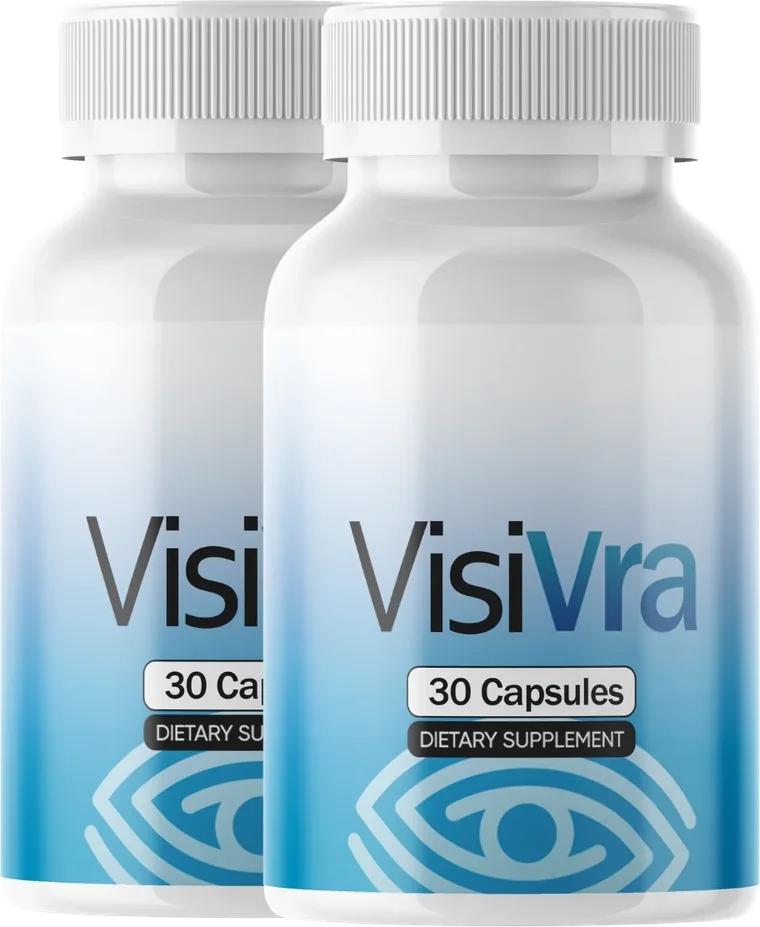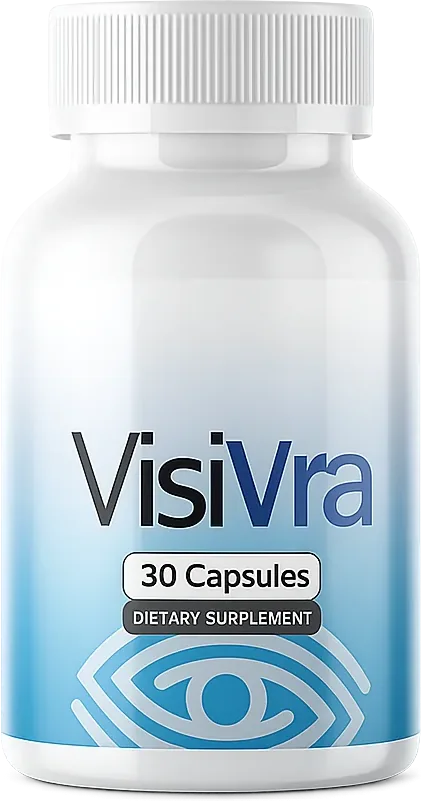
Visivra Capsules lutein and zeaxanthin are two of the six names on the seller's ingredient list; no amount for either is printed in anything we hold1. The other four names are bilberry extract, astaxanthin, zinc and vitamin A, and the bottle panel is not visible in the photos we were given.
Lutein and zeaxanthin are among the most studied nutrients in eye research, which is exactly why they are easy to oversell. This page sets out what they are, what one large government study actually tested, and why those results cannot be carried over to Visivra. It ends with food sources, because public guidance on these two pigments starts with the plate, not the pill.
Line01What are the lutein and zeaxanthin listed for Visivra Capsules?
Lutein and zeaxanthin are carotenoids, a family of yellow, orange and red plant pigments. Unlike beta-carotene, the body does not convert them into vitamin A2.
That second point is easy to miss and matters for safety reading. Because lutein and zeaxanthin are not turned into vitamin A, they do not count toward the vitamin A figures on a label. The vitamin A on the seller's list is a separate ingredient, and its form is unknown; our vitamin A page explains why that matters.
The two are almost always discussed together. They occur side by side in many foods, and research tends to test them as a pair. The American Academy of Ophthalmology names leafy greens such as kale, spinach and Swiss chard as sources3.
On the seller's list, they appear as two separate names. We do not know the amount of either, whether they come from a plant extract or another source, or the ratio between them. Reading the Supplement Facts panel is the only way to find out.
Line02What did AREDS2 test with lutein and zeaxanthin?
AREDS2 tested a high-dose formula that included lutein 10 mg and zeaxanthin 2 mg, alongside vitamin C, vitamin E, zinc and copper, in people with age-related macular degeneration (AMD).
The full AREDS2 formula was vitamin C 500 mg, vitamin E 400 IU, zinc 80 mg, copper 2 mg, lutein 10 mg and zeaxanthin 2 mg. The earlier AREDS formula had used 15 mg of beta-carotene in place of lutein and zeaxanthin4.
The findings are specific. Among people with intermediate AMD, these supplements lowered the risk of moving to advanced AMD by about 25 percent. They did not stop AMD from starting, and they had no effect on cataract4.
Ten-year follow-up added another result. Replacing beta-carotene with lutein and zeaxanthin removed the lung-cancer risk seen with beta-carotene, and the lutein and zeaxanthin version was more effective at lowering AMD progression. Lutein and zeaxanthin did not raise lung-cancer risk5.
Notice who was studied: people who already had AMD at a stage where it could progress. The study was not about people with healthy eyes, and it did not test lutein or zeaxanthin on their own.
Line03Why do AREDS2 results not apply to Visivra Capsules?
They do not apply because Visivra is a different product, its amounts are unknown, and it has not been tested in the people AREDS2 studied.
Laying the two side by side shows how much is missing:
- Amounts. AREDS2 used fixed study amounts. Visivra prints none in anything we hold, so no comparison is possible.
- Companion nutrients. The study formula included vitamin C, vitamin E and copper. The seller's list for Visivra does not name any of the three.
- Extra ingredients. Visivra's list includes bilberry extract and astaxanthin, which were not part of the AREDS2 formula.
- People. AREDS2 enrolled people with AMD. Visivra is sold to the general public.
- Testing. We know of no study of Visivra itself.
So the honest statement is short. AREDS2 tells you what one formula did in one group. It tells you nothing about what Visivra will do for you. The National Eye Institute advises talking with your doctor or eye care professional about which supplement, if any, is right for you6.
Line04Which foods give lutein and zeaxanthin besides Visivra Capsules?
Green leafy vegetables are the main named source. Public guidance links diets rich in them to lower AMD risk and points to kale, spinach and Swiss chard by name.
| Source | What public sources say | Amount known to us? |
|---|---|---|
| Kale | Named as a leafy green with lutein and zeaxanthin3 | Not given in our sources |
| Spinach | Named as a leafy green with lutein and zeaxanthin3 | Not given in our sources |
| Swiss chard | Named as a leafy green with lutein and zeaxanthin3 | Not given in our sources |
| Green leafy vegetables in general | A good source; diets rich in them have been linked to lower AMD risk6 | Varies by food and portion |
| Visivra Capsules | Both names appear on the seller's list1 | No; not printed in anything we hold |
"Linked to" is the careful phrase here. The AAO says foods rich in vitamins C and E, zinc, lutein, zeaxanthin and omega-3 fatty acids have been linked to lower risks of AMD and cataract3. That describes patterns in diets, not a promise from any single food or capsule.
Food also brings things a capsule cannot: fiber, other vitamins and a meal's worth of variety. Supplements do not replace a varied diet7.
Line05Why do sales pages lean on lutein when describing Visivra Capsules?
Lutein is the best-known name in eye nutrition research, so it lends weight to marketing. Sales pages for the product make claims about eyesight and screens that we cannot verify.
The pattern is common. A famous study ingredient is named, the study is mentioned nearby, and the reader is left to connect the two. As the section above shows, that connection does not hold for Visivra: different amounts, different companion nutrients, different people.
Screen claims deserve their own note. The American Academy of Ophthalmology says screen use can cause digital eye strain, mainly because people blink less while looking at screens. Its advice is behavioral: every 20 minutes, look at something 20 feet away for 20 seconds, and adjust room lighting and screen contrast8. The same source reports that a study found blue-light filters were no more effective for eye-strain symptoms than a neutral filter8.
None of that advice involves a capsule. If screens leave your eyes tired or dry, the habits above are the first step the AAO describes, and an eye care professional is the right next step if symptoms persist. Our screen time page covers this topic on its own.
Line06How much lutein is in Visivra Capsules?
We do not know. No lutein or zeaxanthin amount is printed in the photos or the owner's pack, and the pack itself tells writers not to invent milligrams1.
You may see the AREDS2 figures, 10 mg of lutein and 2 mg of zeaxanthin, quoted near supplements like this one. Those are study amounts, not Visivra's. Using them as a stand-in would be a guess, and we do not guess.
To get the real figures:
- Ask the order desk at +1 (302) 200-3480 or [email protected] for a photo of the Supplement Facts panel.
- Check the panel for an amount next to each name, and whether the source of the lutein is stated.
- Look at the serving size, since the amount listed applies to one serving.
Follow the directions on your bottle; sales copy mentions one capsule a day with a meal, which we could not confirm on a label. Our label guide shows where each of these details sits on a typical panel, and the ingredients hub compares all six names.
Line07Who should ask before taking Visivra Capsules for these carotenoids?
Anyone pregnant, nursing, under 18, with a medical condition or taking any medicine should show the full panel to a doctor or pharmacist first. That advice covers the whole product, not just these two names.
Lutein and zeaxanthin do not sit alone in a Visivra capsule. The same capsule carries zinc and vitamin A, both of which have upper limits, plus bilberry extract and astaxanthin. Your pharmacist will want to see the whole panel and every other supplement you take, including any eye formula or multivitamin that already includes lutein.
Smokers and former smokers have a particular reason to read closely. The lutein-for-beta-carotene swap in AREDS2 mattered because of lung-cancer risk5. Visivra's vitamin A form is unknown, so ask whether it comes as beta-carotene. Never change or stop a medicine on your own. Our safety page brings these checks together.
Line08When does a Visivra Capsules question need an eye exam instead?
Any new or changing vision symptom needs an eye care professional, not a supplement. Lutein on a label cannot tell you what is happening inside your eye.
Many eye diseases have no early symptoms, and a comprehensive dilated eye exam is the single best step for eye health9. How often you need one depends on your risk; for example, every 1 to 2 years if you are over 6010.
See an eye care professional promptly for decreased vision, eye pain, drainage or redness, or double vision11. Flashes of light or a sudden change in what you see also need prompt attention. If you are worried about AMD in particular, that visit is where to ask whether any supplement makes sense for you.
Tool
Bottle panel checker
When your bottle arrives, or when the order desk sends the panel, tick what you see and what applies to you. You get a short list of notes and questions to take to a pharmacist. Nothing leaves your device.
Your notes
- Tick what your label shows. With nothing ticked, the first note is simple: you have not yet seen the amounts, so ask for the panel before you take a capsule.
These notes repeat cautions from NIH, NCCIH, NEI and CDC sources cited on this site. They are not medical advice and do not replace a pharmacist or an eye exam.
Safety: Visivra is sold for adults. The bottle photos show only the front label; no Supplement Facts panel, amounts or warnings are visible. Read the full panel before use. The seller lists vitamin A and zinc, which have daily upper limits from all sources combined. If you are pregnant or might be, breastfeeding, under 18, smoke or used to smoke, have a medical condition or take any medicine, ask your doctor or pharmacist first. Never change a prescribed medicine on your own. A supplement does not replace an eye exam: sudden vision changes, eye pain, redness, flashes or double vision need an eye care professional.
Frequently asked questions
How many milligrams of lutein does one Visivra capsule hold?
It is not printed in anything we hold, so we cannot state it. Ask the order desk at +1 (302) 200-3480 for a photo of the Supplement Facts panel.
Is zeaxanthin listed separately from lutein for Visivra?
Yes, the seller's list names lutein and zeaxanthin as two of six ingredients. The amount and ratio of each are not printed in our materials.
Does the body turn Visivra's lutein or zeaxanthin into vitamin A?
No. NIH says the body does not turn lutein or zeaxanthin into vitamin A. Vitamin A is a separate name on the seller's list.
Why can't AREDS2 results be borrowed for Visivra Capsules?
AREDS2 tested fixed high amounts with vitamin C, vitamin E, zinc and copper in people with AMD; Visivra's amounts are unknown and those results do not apply to it.
Who should I ask about Visivra Capsules if I have a macular condition?
That is a question for your eye care professional, who can tell you whether any supplement fits your case. We make no claim that Visivra does anything for macular disease.