How Visivra Capsules work cannot be explained with any confidence, because no ingredient amounts are printed in anything we hold and we found no study of the product1.
A mechanism is a chain: a known amount of a substance reaches the body, does something measurable, and that change leads to an outcome people can notice. For Visivra, the first link is already missing. We know six ingredient names from the seller's list, and nothing about how much of each a capsule holds.
So this page does three honest things instead. It describes the idea the product is built around, explains what health agencies say about the listed nutrients, and sets out what a real "how it works" claim would need. We are an independent information site, not the maker.
Line01What is the stated idea behind Visivra Capsules?
The idea is a single daily capsule that combines several nutrients often linked with the eyes: lutein, zeaxanthin, bilberry extract, astaxanthin, zinc and vitamin A.
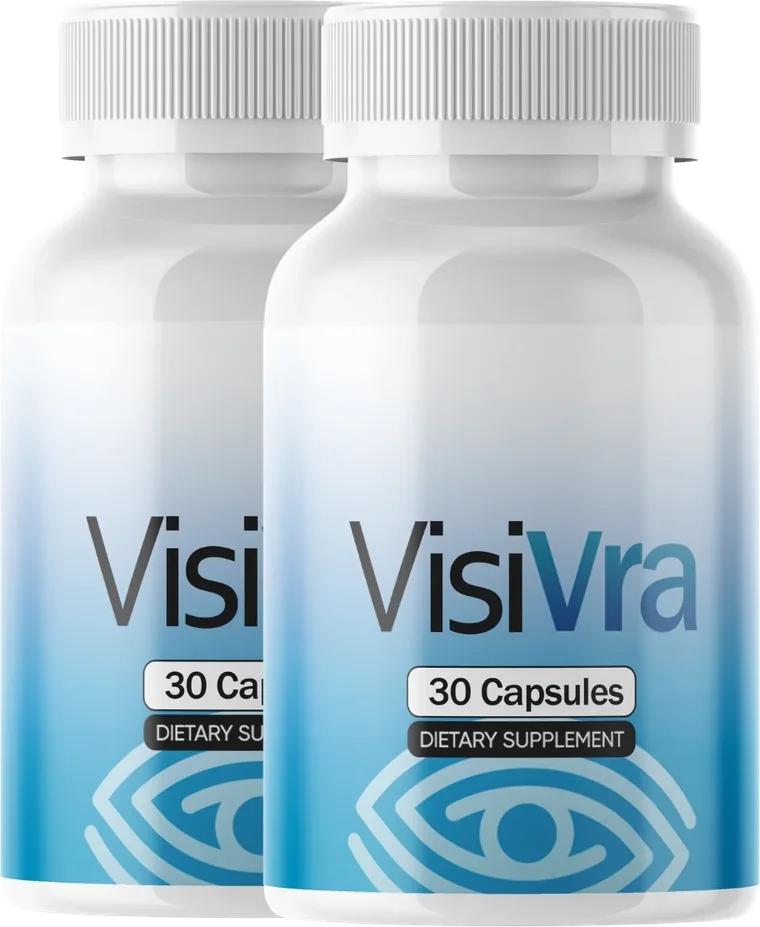
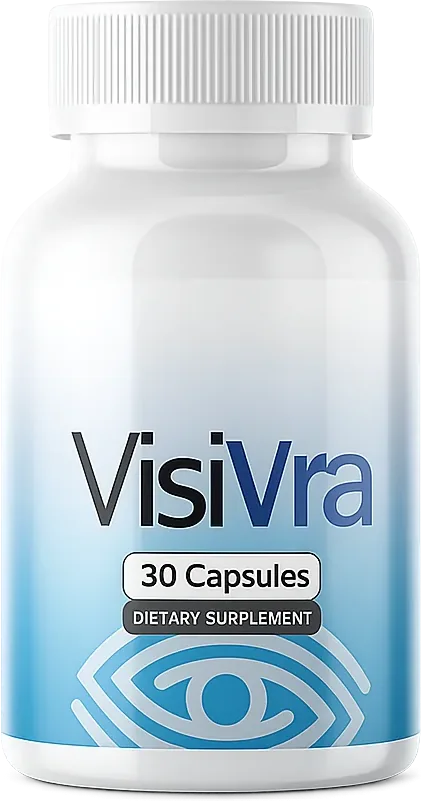
Those six names come from the seller's list in the owner's information pack1. The bottle photos we hold show only the front label, with "VisiVra", "DIETARY SUPPLEMENT" and "30 Capsules"2. No Supplement Facts panel is visible, so the list has not been checked against a printed panel.
Sales copy mentions one capsule a day with a meal, which we could not confirm on a label. Sales pages also make claims about eyesight and screens that we cannot verify. A combined formula is a common approach for eye-focused supplements, but a list of names is a description of contents, not a mechanism. See the full list on our ingredients page.
Line02What does the nutrient biology actually say?
Health agencies describe body roles for some of these nutrients, but those roles are about the nutrients in general, not about Visivra.
Vitamin A
The NIH says vitamin A is important for normal vision, the immune system, reproduction and growth3. It comes as preformed vitamin A or as carotenoids such as beta-carotene, which the body turns into vitamin A. Deficiency is rare in the US. More on our vitamin A page.
Lutein and zeaxanthin
These are carotenoids too, but the body does not convert them into vitamin A4. They are found in leafy greens. Our lutein and zeaxanthin page covers food sources and the study that used them.
Zinc, bilberry and astaxanthin
Zinc is a mineral adults need in small amounts, with an upper limit from all sources. Bilberry is promoted for eye conditions, but there is not enough reliable evidence to say whether it helps any health condition. Astaxanthin has a public safety review for adults, not an eye-effect finding. Visivra's amounts are not shown, so none of this says what it will do for you.
Line03Why is a nutrient role not the same as a product effect?
A nutrient role describes what goes wrong when the body lacks something; a product effect would describe what an extra dose adds for you.
Vitamin A shows the difference well. The NIH notes that the most common sign of vitamin A deficiency is xerophthalmia, which starts as trouble seeing in low light3. That tells us vitamin A is needed. It does not tell us that a person who already gets enough from food will notice anything from more. The NIH also says deficiency is rare in the US, so most readers of this page are not short of vitamin A to begin with.
The same gap applies to every name on the list. "Vitamin A is needed for normal vision" and "adults need a little zinc every day" are statements about biology, and true ones. Turning them into "this capsule works" needs three extra steps: the amount in the capsule, proof that amount changes something, and proof the change matters to people. A sales page that skips from biology to benefit has left those steps out.
There is also the question of what else is in your day. Someone who eats leafy greens most days, takes a multivitamin and uses zinc lozenges in winter starts from a very different place from someone who does none of those. A capsule's place in that picture depends on its amounts, which we do not have.
Line04Why do the amounts decide whether a formula could work?
Because a nutrient's effect depends on how much is taken, a formula with unknown amounts cannot be matched to any research finding.
The clearest example is the National Eye Institute's AREDS2 formula. It used set amounts: vitamin C 500 mg, vitamin E 400 IU, zinc 80 mg, copper 2 mg, lutein 10 mg and zeaxanthin 2 mg5. In people with intermediate AMD, supplements like it lowered the chance of advancing to late AMD by about 25 percent. They did not stop AMD from starting and had no effect on cataract.
Those results belong to that formula, in that group of people. They cannot be carried over to Visivra, which is a different product with no printed amounts and a different ingredient set. Even inside the study, the amounts were part of the finding: change them and you have a new formula that would need its own test.
Amounts also matter for safety. Too much preformed vitamin A or zinc can cause problems, so a mechanism story that skips the numbers skips the safety check as well. For example, the adult upper limit for zinc is 40 mg a day from all sources, food and products together, and long use of too much can lower copper levels6. Without a printed zinc amount you cannot add it up. Our safety page explains the upper limits.
Line05What would a real mechanism claim for Visivra Capsules need?
It would need a full label, evidence that the amounts reach the body, and a product study with a comparison group.
| Link in the chain | What a claim would need | What we have for Visivra |
|---|---|---|
| Contents | Every ingredient with amount and form | Six names only, from the seller's list |
| Dose | Printed serving and directions | Sales copy only; label not seen |
| Body effect | Measured change at that dose | General nutrient roles only |
| Outcome | Study of this formula against a placebo | None found |
| Quality | Batch documents you can check | A lot and certificate reference we have not seen |
The last row matters too. The owner's pack lists a lot code and a certificate reference, but we have not seen the bottle base or the certificate, so we cannot say the product was tested. You can compare the lot and best-before on your bottle with the order desk at +1 (302) 200-3480. Our bottle check shows how.
Line06What do FDA and FTC rules say about how-it-works claims?
The FDA does not approve dietary supplements or their claims, so a how-it-works statement on a supplement page is the seller's own claim7.
The FDA says makers and distributors are responsible for safety and truthful labels, and supplements are not approved before they are sold8. A structure/function claim, the type that says a nutrient affects a body part, must carry the FDA statement and is not approved by the FDA9.
The FTC adds rules on how products are promoted:
- Fake reviews and testimonials are banned under a 2024 final rule10.
- Paid or affiliate relationships must be disclosed, which is why this site has an affiliate disclosure11.
One practical result: a how-it-works diagram or a row of badges on a sales page is marketing material, and no agency has reviewed it before you see it. None of these rules mean a claim is false. They mean no agency has checked it for you, so the burden of proof sits with the seller.
Line07How long would Visivra Capsules take to do anything?
No one can say, because there is no product study and so no measured timeline of any kind.
A timeline claim, such as a change after a set number of weeks, would need a study that measured people at set points. We found none for Visivra. The owner supplied three short testimonials that mention how many days the writers had been taking the capsules. They talk about routine, such as taking a capsule with a meal, and none describes an eyesight result; one says a fast change did not happen. The stars are mixed: 5, 4 and 3.
Seller-supplied comments are not evidence of an effect or a timeline. If you notice any change in your vision while taking any supplement, whether you think it is better or worse, have it checked by an eye care professional rather than reading it as a product effect.
Line08How can you get real answers about Visivra Capsules?
Ask the seller for the label and the evidence, and ask your doctor or pharmacist whether the formula suits you.
- Ask the order desk (+1 (302) 200-3480, [email protected]) for a photo of the full Supplement Facts panel.
- Ask which study, if any, tested this exact formula, and in whom.
- Ask for the certificate that matches the lot on your bottle.
- Take the panel to your doctor or pharmacist, especially if you take medicines, are pregnant or smoke.
- Keep your yearly or advised eye exam whatever you decide.
If the answers satisfy you, packs and the live price are on the order page: See the live price. If they do not, our comparison guide explains what a complete label looks like.
Safety: Visivra is sold for adults. The bottle photos show only the front label; no Supplement Facts panel, amounts or warnings are visible. Read the full panel before use. The seller lists vitamin A and zinc, which have daily upper limits from all sources combined. If you are pregnant or might be, breastfeeding, under 18, smoke or used to smoke, have a medical condition or take any medicine, ask your doctor or pharmacist first. Never change a prescribed medicine on your own. A supplement does not replace an eye exam: sudden vision changes, eye pain, redness, flashes or double vision need an eye care professional.
Frequently asked questions
How does Visivra work, in plain terms?
Nobody can say, because no ingredient amounts are printed in anything we hold and no study of the product was found. The seller's idea is several eye-linked nutrients in one daily capsule.
What is the mechanism of Visivra Capsules?
No mechanism has been shown for this formula. Health agencies describe roles for nutrients like vitamin A, but those roles do not show what a capsule with unprinted amounts does.
How long would someone need to take Visivra before it could be judged?
No one can say, because no study of the product defines a test period or outcome. Any vision change while taking a supplement should be checked by an eye care professional.
Is there science behind the Visivra formula?
There is science on some single nutrients and on the AREDS2 formula in people with AMD, but none on this product that we found. Those results do not transfer to a different formula.
Has the seller shared any studies on Visivra Capsules?
Not with us, and we found none published. Ask the order desk which study, if any, tested this exact formula and what amounts were used.