Visivra Capsules for cataracts is a question the evidence does not support with a yes: we hold no study of the product, and the best-known supplement trials found no effect on cataract. Cataract is a condition for an eye care professional to assess.
This post covers what NEI reports about the AREDS formulas and cataract, what the American Academy of Ophthalmology says about food, and what we cannot know about a bottle whose panel is not visible in our photos1. It names cataract only as a topic.
Line01Do Visivra Capsules have any proven link to cataracts?
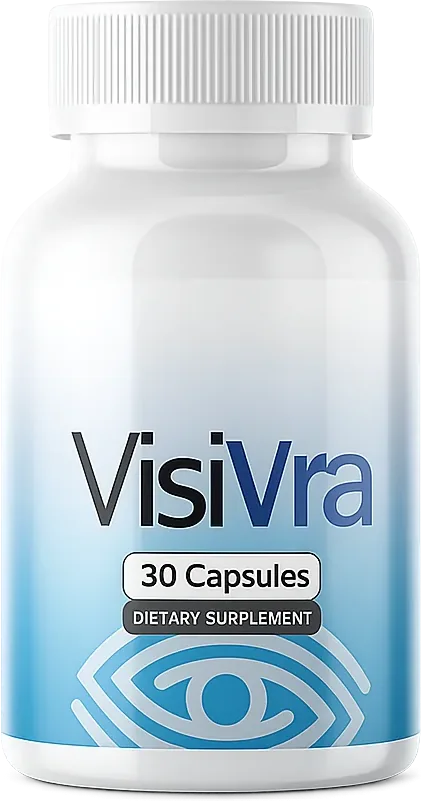
No. We hold no study of Visivra Capsules, and the bottle photos show only a name, the words "DIETARY SUPPLEMENT" and a count of 30 capsules1.
The seller's ingredient list names lutein, zeaxanthin, bilberry extract, astaxanthin, zinc and vitamin A, but prints no amounts2. Without amounts, nobody can compare the capsules with any study, and we do not try to.
Sales pages for the product make eye claims that we cannot verify, so we do not repeat them. If you want a plain overview of what is and is not known about the capsules, see our benefits page, which keeps to sources.
Line02What did the AREDS formulas show about cataract?
NEI reports that the AREDS and AREDS2 supplements have no effect on cataract3. They were tested for a different eye condition, age-related macular degeneration, in people at risk of it advancing.
The AREDS2 formula used specific high amounts of vitamin C, vitamin E, zinc, copper, lutein and zeaxanthin3. The researchers saw about a 25 percent lower risk of progression from intermediate to advanced AMD in that setting, and the supplements did not stop AMD from starting3.
These results are study facts. They do not apply to Visivra, which is a different product with amounts we cannot see. We quote them only because the same study named cataract and found nothing, and because people often assume an eye supplement covers every eye condition. NEI's own FAQ suggests asking your doctor or eye care professional which supplement, if any, is right for you4.
Line03What does the AAO say about food and cataracts?
The AAO says foods rich in vitamins C and E, zinc, lutein, zeaxanthin and omega-3 fatty acids have been linked to lower risks of AMD and cataract5. The key word is foods.
Lutein and zeaxanthin are found in leafy greens such as kale, spinach and Swiss chard5. A link in a diet is not the same as a result from a capsule, because food brings many nutrients together and a pill does not.
We offer this as context, not as a plan. If you want to change how you eat, a doctor or dietitian can fit that to your health and medicines. Keep in mind that a supplement does not replace a varied diet, and that the AAO page describes links seen across foods, not a promise for any one person. For lutein in particular, our lutein and zeaxanthin page goes through the NIH and NEI facts.
Line04How do the sources compare at a glance?
Each source answers a different question, and none of them is about Visivra. The table lines them up so the limits are clear.
| Source | What it looked at | What it says about cataract |
|---|---|---|
| NEI, AREDS/AREDS2 | Supplement formulas in AMD | No effect on cataract3 |
| AAO, diet and nutrition | Foods and eye risk | Foods linked to lower AMD and cataract risk5 |
| NEI, dilated eye exam | Checking eye health | The way to check for many eye diseases early6 |
| Visivra Capsules | Nothing we hold | No study; amounts not printed2 |
Notice that the one row without a study is the product itself. That is not a judgment of the capsules. It simply means nobody, including us, can say what they do for cataract.
Line05When should you see an eye care professional?
See one as soon as you notice a change in your vision, and keep up regular dilated exams. NEI says the exam is the only way to check for many eye diseases early, and that how often you need one depends on risk6.
For example, NEI gives every 1 to 2 years if you are over 606. We cannot diagnose cataract or anything else from a description, and no supplement can do that either.
- Book an exam if you have not had one lately.
- Bring the bottle, or the Supplement Facts panel, plus a list of every medicine you take.
- If you are pregnant, nursing, under 18, a smoker or a former smoker, or have a medical condition, ask a doctor or pharmacist before any supplement.
- Never change or stop a medicine on your own.
Our safety page lists the cautions for each listed ingredient. If you are only checking current details, the live checkout page shows what is on offer, and a call to the order desk at +1 (302) 200-3480 can answer questions about the bottle.
Safety: Visivra is sold for adults. The bottle photos show only the front label; no Supplement Facts panel, amounts or warnings are visible. Read the full panel before use. The seller lists vitamin A and zinc, which have daily upper limits from all sources combined. If you are pregnant or might be, breastfeeding, under 18, smoke or used to smoke, have a medical condition or take any medicine, ask your doctor or pharmacist first. Never change a prescribed medicine on your own. A supplement does not replace an eye exam: sudden vision changes, eye pain, redness, flashes or double vision need an eye care professional.
Frequently asked questions
Is there a study linking Visivra Capsules to cataracts?
We cannot say that. NEI reports the AREDS formulas had no effect on cataract, and we hold no study of Visivra.
Can eye study results on cataract be used to judge Visivra Capsules?
No. Those studies tested specific high amounts in people with AMD, and Visivra's amounts are not printed, so the results cannot be applied to it.
Is food a better route than Visivra Capsules for lutein?
The AAO links foods rich in lutein and zeaxanthin, such as kale and spinach, to lower AMD and cataract risk. That is about food, not a capsule, so ask your doctor what suits you.
What should I do first if I think I have a cataract and use Visivra Capsules?
See an eye care professional for an exam. A supplement cannot confirm or rule out a cataract.